Same Fandom, Different Galaxies: Why Gen Z and Millennials Can't Agree on What Sci-Fi Even Is Anymore
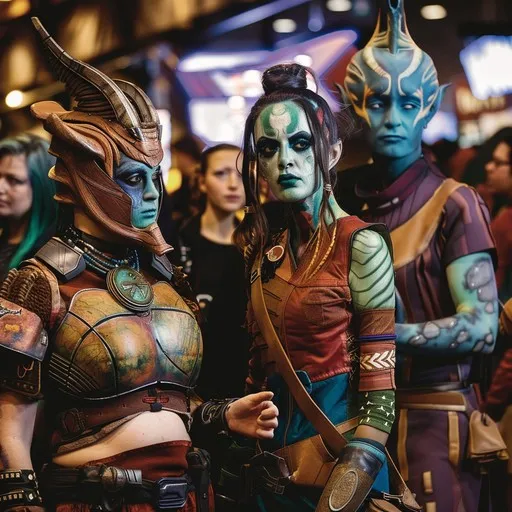
Photo: young diverse fans at science fiction convention cosplay discussion, via images.stockcake.com
Two Fans Walk Into a Con
Picture this: a 34-year-old millennial and a 20-year-old Gen Z fan end up in the same panel room at a mid-sized sci-fi convention. The panel topic is "The Future of the Franchise." Within ten minutes, they're talking past each other so completely that a moderator has to step in.
The millennial is upset about a reboot that "ruined" something from their childhood. The Gen Z fan has never seen the original and doesn't understand why that matters. The millennial thinks the younger fan is being dismissive of history. The Gen Z fan thinks the older fan is being weirdly possessive of a fictional universe.
Neither of them is entirely wrong. And this kind of moment is playing out all over fandom right now.
How Streaming Broke the Shared Experience
For a long time, being a sci-fi fan meant sharing a cultural moment. You watched the same episode of The X-Files the night it aired. You stood in line for the Star Wars prequel opening weekend. You argued about it at school on Monday morning. The experience was communal in a way that shaped not just what you loved, but how you loved it.
Streaming absolutely shredded that model. Not maliciously — but completely.
When Netflix drops an entire season at once, there's no shared weekly rhythm. When an algorithm serves up a 2003 Battlestar Galactica episode to a 19-year-old in Ohio because they watched one space opera clip on YouTube, that fan's entry point into the genre is radically different from someone who watched the original miniseries live. The catalog is infinite. The onramp is personalized. And the result is that two people who both identify as passionate sci-fi fans might have almost zero overlap in their actual viewing history.
Millennial fans often describe a kind of grief around this. The communal countdown to a new episode, the shared gasp at a plot twist, the unified fandom outrage or joy — those experiences feel increasingly rare. Gen Z fans, for their part, often don't mourn what they never had. They've built their own communal moments, just in different places: TikTok reaction threads, Discord servers, YouTube video essays that go deep on a single episode of a show most people have never heard of.
The Reboot Wars
Nothing illustrates the generational fault line quite like the debate over reboots and legacy franchises.
For many millennial fans, beloved properties from the '80s, '90s, and 2000s are tied up in formative memories. When those properties get rebooted, reimagined, or handed off to new creative teams, the emotional stakes feel personal in a way that's hard to explain to someone who didn't grow up with the original. The complaint isn't always about quality — it's about identity. "They changed my thing" lands differently when "my thing" was a core part of who you were at age twelve.
Gen Z fans frequently find this exhausting. From their vantage point, they're encountering a franchise fresh, without the weight of thirty years of lore and fan expectation. A new version of something is just... a new version. Judge it on its own terms. The reverence for the original can feel like gatekeeping, a way of saying your relationship with the material is more legitimate than mine.
Both positions make sense in context. But they create real friction — in convention panels, in online comment sections, and in the cosplay community, where a Gen Z fan's creative reimagining of a classic character can spark surprisingly heated debate from older fans who feel the design "isn't accurate."
Cosplay as a Generational Flashpoint
Speak of cosplay — it's actually one of the most interesting places to watch this generational dynamic play out in real time.
Millennial cosplayers grew up in a culture that celebrated screen-accurate recreation. The goal was often to look as close to the source material as possible. Craftsmanship was measured in how convincingly you could replicate a canonical design. That ethic still drives a huge portion of the cosplay community and produces genuinely stunning work.
But Gen Z cosplayers have brought a different sensibility to the craft. Gender-swapped designs, mashup costumes that blend two different fictional universes, "closet cosplays" that capture a character's vibe without replicating their exact outfit — these approaches reflect a generation that grew up with fan art, alternate universe fan fiction, and a generally more fluid relationship with canon. For them, cosplay is often more about self-expression and community connection than technical accuracy.
The result is two cosplay cultures existing side by side on the same convention floor, sometimes celebrating each other and sometimes talking right past each other.
Online Discourse and the Values Gap
How fans talk about what they love — and what they hate — also looks pretty different across generational lines.
Millennial fan culture was shaped by early internet forums, LiveJournal communities, and the long-form debate. Arguments were often exhaustive, citation-heavy, and deeply invested in canon. The concept of "fan canon" versus "head canon" was a serious distinction.
Gen Z fan culture tends to move faster and feel more emotionally expressive. Short-form video, reaction content, and meme-based discourse are the native formats. Opinions get formed and spread rapidly. There's also — and this is genuinely generational — a stronger tendency to center questions of representation, diversity, and creator ethics in how a piece of media gets evaluated.
This isn't to say millennials don't care about representation, or that Gen Z fans don't appreciate craft. But the emphasis and vocabulary are different enough that cross-generational conversations about a shared franchise can feel like translation exercises.
What Holds It Together
For all the friction, here's what's easy to miss: both generations are still showing up. To the cons, to the fan communities, to the Discord servers and subreddits and craft tables. The love of speculative fiction — the genuine delight in imagining other worlds — is still the shared language.
The most vibrant corners of fandom right now are the ones where those generational energies are actually mixing. Where a millennial fan's deep lore knowledge meets a Gen Z fan's creative irreverence and something unexpected gets made. Where a cosplay contest judge appreciates both the screen-accurate Mandalorian armor and the genderbent reimagining of a 1980s robot design.
Sci-fi has always been about more than one kind of future. Maybe fandom can handle more than one kind of fan.