From Hot Property to Shelf Dust: The Brutal Economics Behind Sci-Fi Collectible Crashes
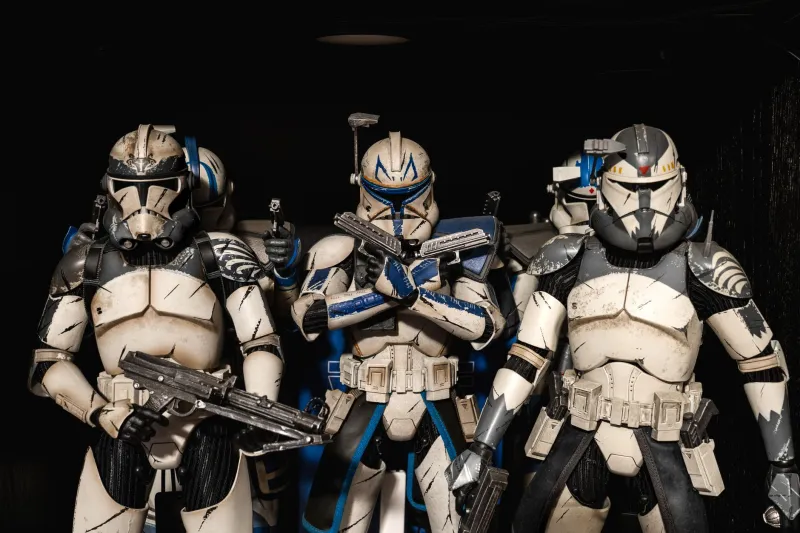
There's a particular kind of heartbreak that hits when you check eBay on a whim and discover that the "exclusive" statue you dropped $180 on eighteen months ago is now listed — repeatedly, desperately — for $34 with free shipping. Nobody's buying those either.
Sci-fi fandom runs on passion, and passion has a price tag. Studios, licensors, and third-party manufacturers know this better than anyone. The collectibles market is built on the assumption that love for a franchise translates directly into purchasing behavior, and for a while, it does. Then the bubble pops, and fans are left holding a resin figure of a character from a show that got canceled after one season.
So what actually happens between "sold out in 48 hours" and "please, someone take this off my hands"?
The Hype Machine and Its Very Short Memory
When a new sci-fi property explodes — think a prestige streaming debut, a franchise revival, or a film that dominates the cultural conversation for a summer — the merchandise pipeline kicks into overdrive almost immediately. Licensing deals get signed, production runs get greenlit, and within months, shelves are stocked with everything from $12 keychains to $400 resin busts.
The problem is timing. By the time most of that merchandise hits retail, the cultural moment has already peaked. Fans who were obsessively posting fan art and rewatching episodes in October are, by the following spring, already halfway into their next hyperfixation. The emotional high that made someone willing to spend real money has a shelf life, and it's shorter than most production cycles.
"The window where a fan is at maximum emotional investment is maybe three to six months after a property drops," says Marcus Delray, a reseller based out of Atlanta who has been flipping sci-fi collectibles for nearly a decade. "By the time the 'premium exclusive' ships, half the people who preordered it have cooled off. Some of them cancel. The ones who don't are suddenly holding something they wanted six months ago."
Oversaturation Is a Feature, Not a Bug
Here's the part that stings: studios and licensors aren't ignorant of this dynamic. They're counting on it.
The modern collectibles market operates on a volume model. Flood the zone with product — multiple scales, multiple price points, multiple retailer exclusives — and capture as many wallets as possible during the excitement window. If the property has legs, great. If it doesn't, the licensing fees were already collected and the risk sits with the manufacturers and the fans who bought in.
Tamsin Okafor, who runs a small sci-fi collectibles shop in Chicago and has watched this cycle repeat for years, puts it bluntly: "The studios get paid whether your statue holds value or not. The licensing deal doesn't care about the secondary market. So there's no incentive for them to protect the scarcity that makes something worth owning."
This is where the "limited edition" language gets slippery. A figure numbered out of 5,000 units sounds exclusive. But when there are four other versions — a chrome variant, a con exclusive, a retailer exclusive, a deluxe edition — the total production across all versions can easily dwarf what any single run implies. Collectors who thought they were buying scarcity discover they bought one slice of a much larger pie.
When the Show Dies, So Does the Value
Nothing accelerates a collectible's value collapse quite like a cancellation. A passionate fandom can sustain secondary market prices for a while through sheer loyalty, but once the content pipeline dries up and new fans stop entering the ecosystem, demand just evaporates.
The streaming era has made this worse. Properties that would have run for five seasons on network television now get two seasons on a streaming platform before the algorithm decides they're not worth the renewal cost. Fans who invested in merchandise during season one are left with artifacts from a story that will never be finished.
"I've got a whole shelf of stuff from shows that got axed," admits Priya Nanthakumar, a collector from the Dallas area who's been buying sci-fi merchandise since the early 2000s. "Some of it I still love because I love the story, even if it ended badly. But the idea that any of it is an 'investment'? I stopped thinking that way a long time ago. It's memorabilia, not a portfolio."
That distinction — memorabilia versus investment — is one that a lot of fans learn the hard way.
The Emotional Tax
What makes the collectibles crash especially complicated is that the transaction was never purely financial in the first place. When a fan buys a detailed replica of a beloved ship or a figure of a character who changed how they see the world, they're not just buying an object. They're buying a piece of their own emotional experience. That's not irrational — it's deeply human.
Studios understand this, and the marketing language around collectibles is engineered to activate it. Words like "tribute," "celebration," and "honor" show up constantly in product descriptions. You're not buying a $250 statue. You're preserving a piece of something that matters to you.
The problem is that this framing papers over the commercial reality underneath. The studio isn't honoring your fandom. It's monetizing it. And when the product doesn't hold its value, the fan is left feeling not just financially stung but somehow betrayed — like their genuine love was used against them.
"That's the part that bothers me more than the money," says Delray. "I've talked to collectors who felt genuinely embarrassed that they spent so much on something that cratered. Like their feelings made them a sucker. That's a rough place to land."
Buying Smarter Without Buying Less
None of this means fans should stop buying merchandise — that's not realistic, and honestly, owning physical things connected to stories you love is a legitimate joy. But there's a difference between buying because you love something and buying because you've convinced yourself it's an investment.
A few hard-won rules from collectors who've been burned before: don't treat "limited edition" as a guarantee of scarcity, research how many variants exist before committing to a purchase, and never spend more than you'd be comfortable losing entirely. If the piece makes you happy on your shelf regardless of what it's worth on the secondary market, that's a solid reason to buy it. If you're mostly thinking about resale, the math usually doesn't work out.
The sci-fi collectibles market will keep booming and busting. New properties will generate new waves of merchandise, new fans will get swept up in the excitement, and some of those purchases will crater while others hold. That's the nature of a market built on passion rather than fundamentals.
What fans can do is go in with their eyes open — and maybe a little skepticism toward any product that promises to let you own a piece of something that was never really for sale in the first place.